APPROACH
Make it small, make it work — then talk about scaling.
Our engagements don't start with 'platform selection' or an 'AI strategy'; they start from one real task. Below: the full method, what you'll receive, and what we don't do.
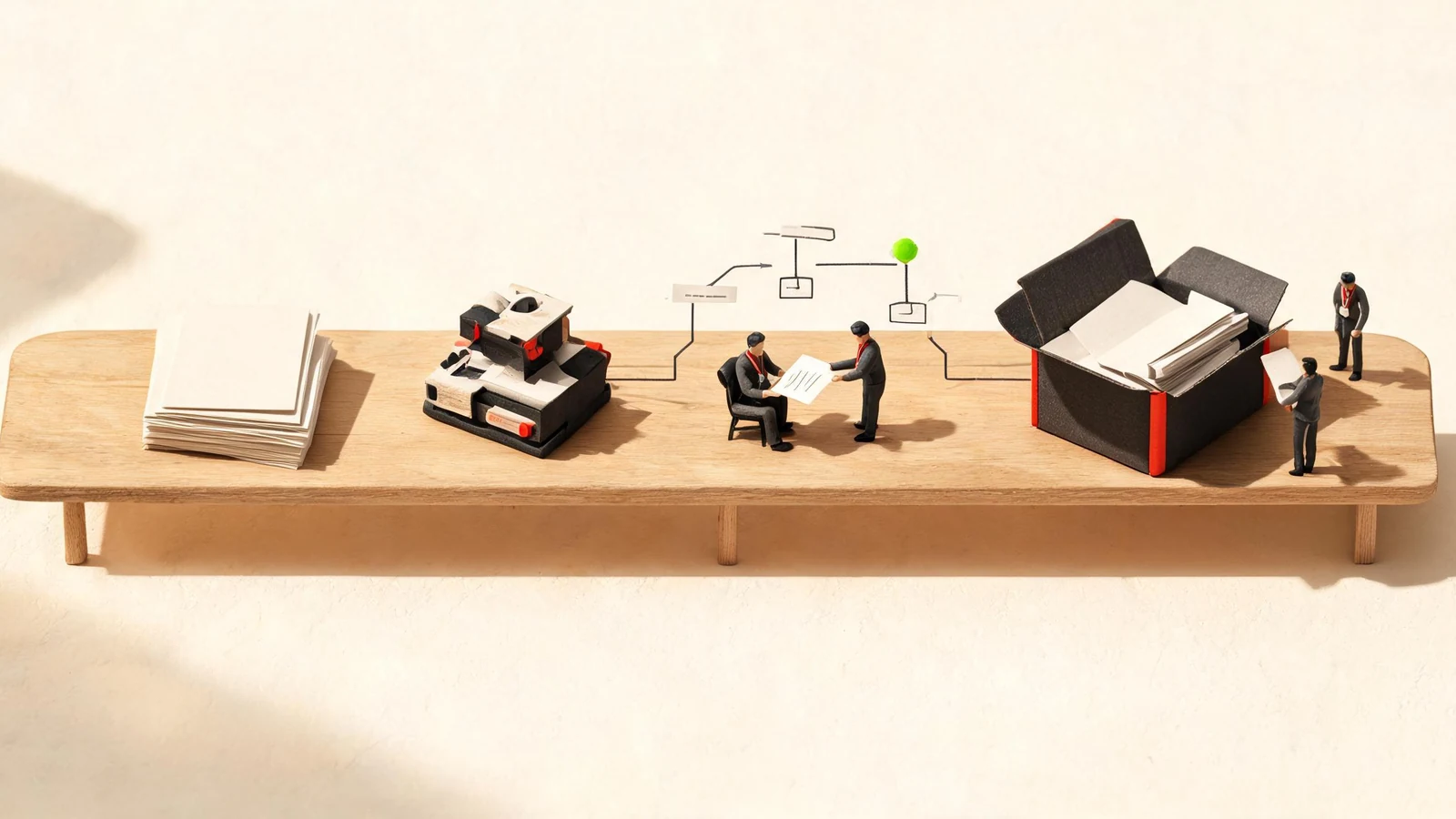
PROCESS / FOUR STEPS
From a real sample to a capability handover
-
01
Take one real sample
Pick a frequent, time-consuming, error-prone task; bring a sanitized sample and your current process. First define what 'done' means.
-
02
Build a minimal viable validation
Map the data, rules and boundaries, and build a small runnable version. If validation fails, you learn early why — and what the alternatives are.
-
03
Integrate the flow, keep the brakes
Connect to your existing mailbox, spreadsheets, databases or internal systems; outbound sending, high-risk judgments and exceptions keep human approval and rollback.
-
04
Deliver and hand over the capability
We deliver source code, configuration, docs and validation records. You can maintain it yourself — or have us keep iterating in phases.
DELIVERABLES
What's in your hands when the project ends
No black boxes: every deliverable is written into the scope before we start; no closed systems only the vendor can modify.
-
01
A system that runs
A small version that plugs into your existing processes — not screenshots of a demo prototype.
-
02
Source code & configuration
Project source and configuration notes handed over together, so you can modify and maintain them yourself.
-
03
Usage documentation
So whoever takes over knows how to use it, how to change it, and where to look first when something breaks.
-
04
Validation records
Which samples were used, what was validated, which scenarios remain uncovered — written down.
BOUNDARIES
What we don't do
These boundaries aren't restrictions — they're what makes the project outcome predictable.
- We don't take vague 'build us a big platform first' requests; we define what 'done' means before anything else.
- Outbound email, key judgments and high-risk actions keep human approval — no unattended automatic execution.
- Cases show only real status: running, live, internal, prototype or iterating — labeled honestly.
- If something isn't a good fit for AI, we say so directly; we don't stack technology just to win a project.
FAQ
The questions we hear most before starting
Do we have to build a big platform from scratch?
No. In most cases, starting from one real workflow and your existing tools is safer. Validate the value first, then decide the scope of the system.
Can we avoid being locked to one particular large model?
Yes. Models are chosen by data, cost, deployment and results; for privately deployable cases we assess hardware and maintenance costs separately — and not every requirement suits on-premise deployment.
We already use email, Excel or internal systems — can you still integrate?
Yes. We first confirm whether your systems offer usable APIs, file formats or database paths. Without interfaces, we evaluate semi-automatic flows rather than forcing full automation.
Will our data be made public?
Showcases and development should use sanitized data. Actual permissions, storage and model invocation are confirmed per project; the cases on this site never disclose client materials, credentials or internal addresses.
Who owns the source code and documentation?
The delivery scope is written down before we start. Our standard delivery includes the project source code, configuration notes and usage docs — no black-box 'vendor-only modifications' arrangements.
How do we start?
Send an email describing what you repeatedly do, which tools each step uses and where it breaks most often, with one sanitized sample attached. We start by discussing one verifiable small task.
START HERE
Pick one real task, and we'll define together what 'done' means.
Email: trade@seedestiny.com.cn